
One house, four generations: From 92 years old to 18 months, how this multigen family co-exist under one roof
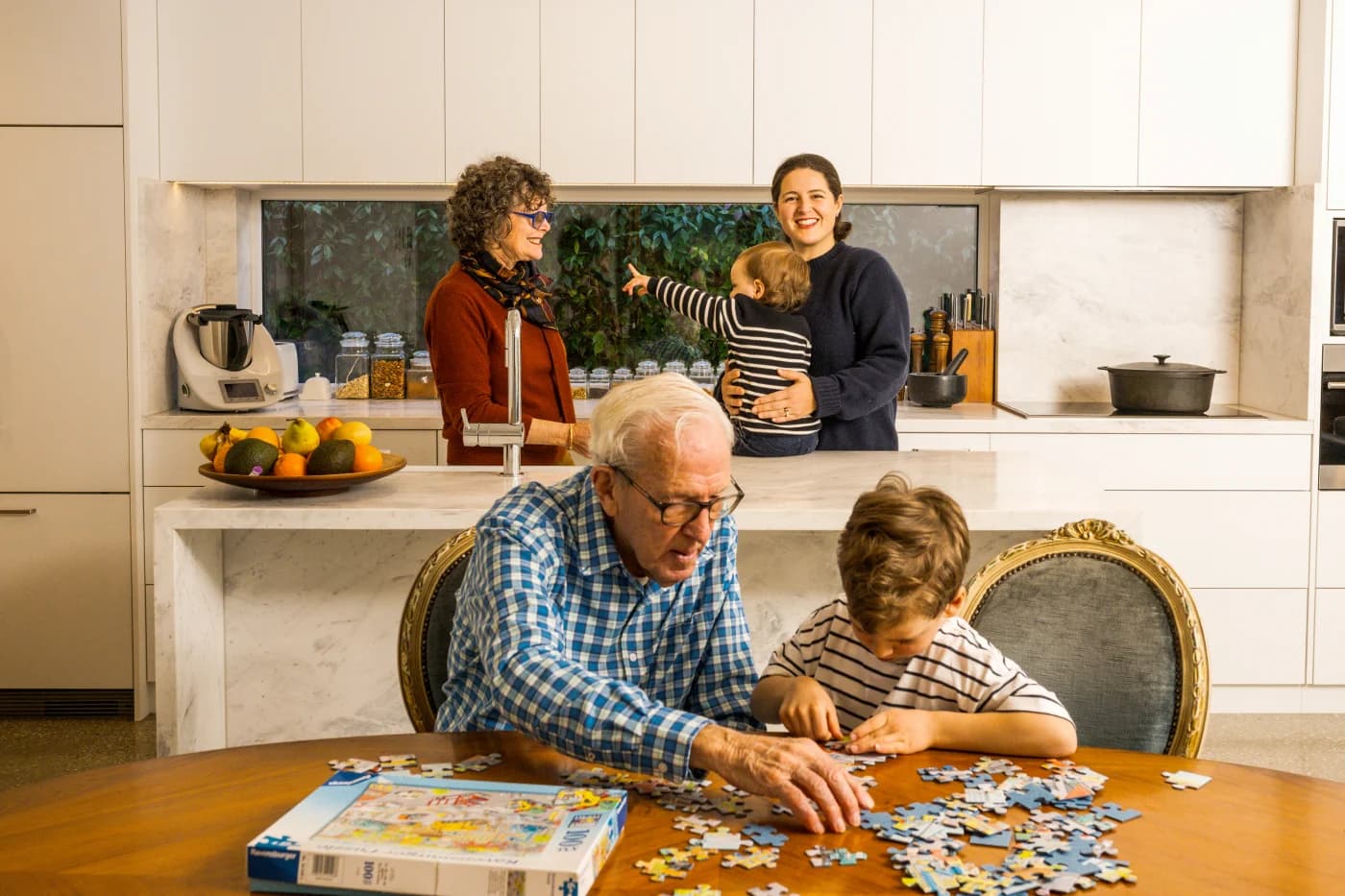
Can one house be all things to all people? This house certainly could.
It’s today being championed as the absolute epitome of future-proofed multigenerational living, designed to cater for older people with health problems just as much as for Baby Boomers, Millennials and their young children.
Architectural designer Gisele Benkemoun knows that better than most.
She planned and had the home constructed for her family for her master’s in architecture, catering for her grandmother Sandy, who had severe disabilities; her grandfather Rick, who’s now not so mobile; her mother Deb and father Claude; and her sons Maxime, 5, and Auguste, 1.
“It’s a fantastic house,” she says of the four-bedroom house with three living quarters in Melbourne’s Malvern.
“It has everything you need for older people ageing in place, including no steps, wide doors and corridors, an internal lift, and even for someone who’s blind or deaf or has dementia, with the bathroom visible from the bed and dimmed lighting coming on when a foot is put out of bed.
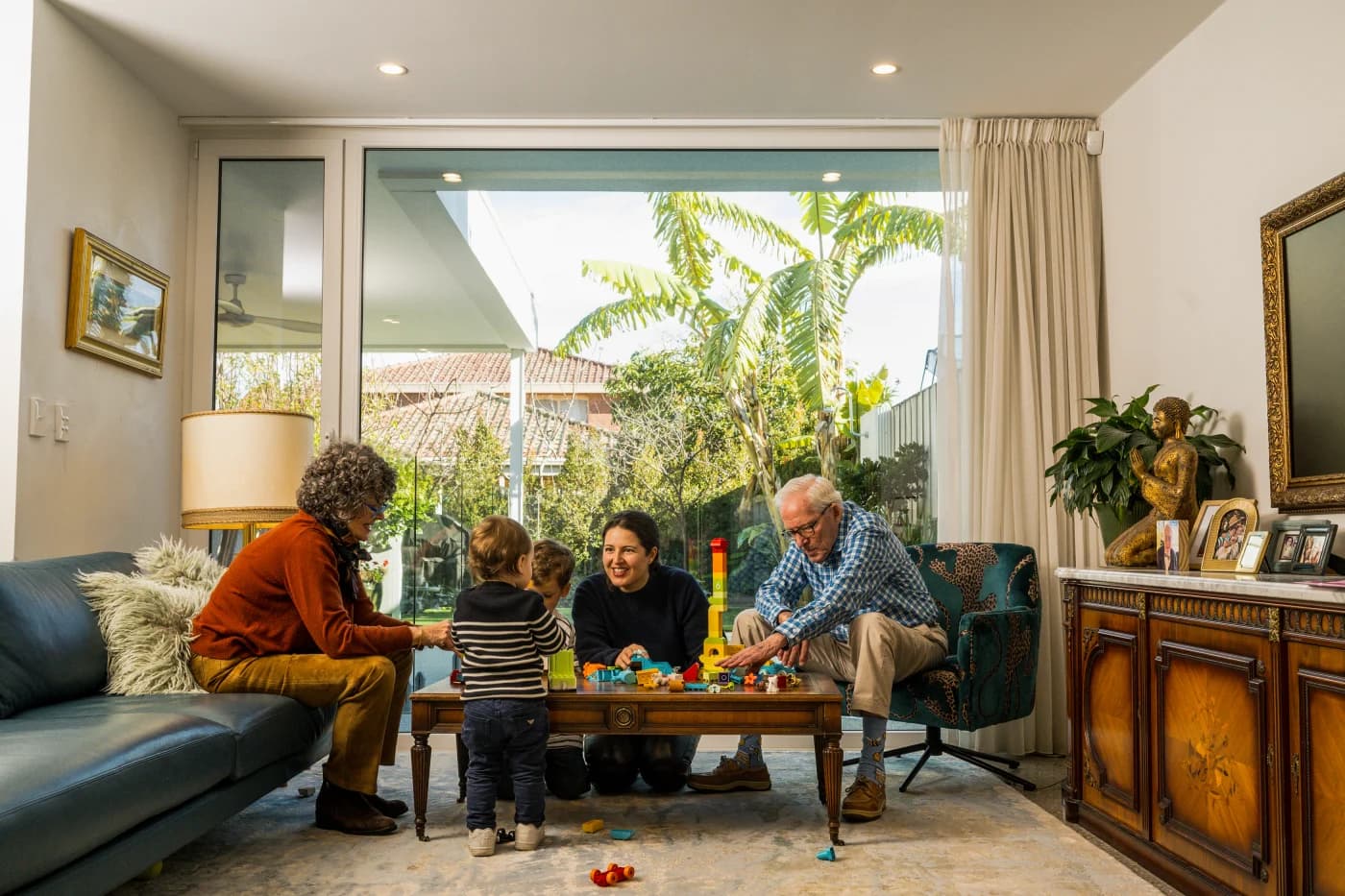
“It means older people can enjoy quality of life till the end, surrounded by their family, while everyone else has lots of space and privacy.
“And it’s incredibly flexible. If one generation moves out, their area can be used by guests or rented out on Airbnb to help pay the mortgage.”
The house, close to shops, cafes and medical facilities, is now open for a guided tour on July 25 as part of the Open House Melbourne festival, which explores great design for a more open, equitable and compassionate city.
It enables different generations to live as communally as they’d like, with open spaces to share or to close off their living quarters when they want to preserve their privacy.
The latest Australian Bureau of Statistics’ Survey of Disability, Ageing and Carers found 95.9 per cent of older Australians were living in households, while 4.1 per cent lived in residential care accommodation.
At the same time, 39.8 per cent of older people living at home needed some assistance with everyday activities, with 52.3 per cent having some kind of disability and 86.6 per cent having one or more long-term health conditions.
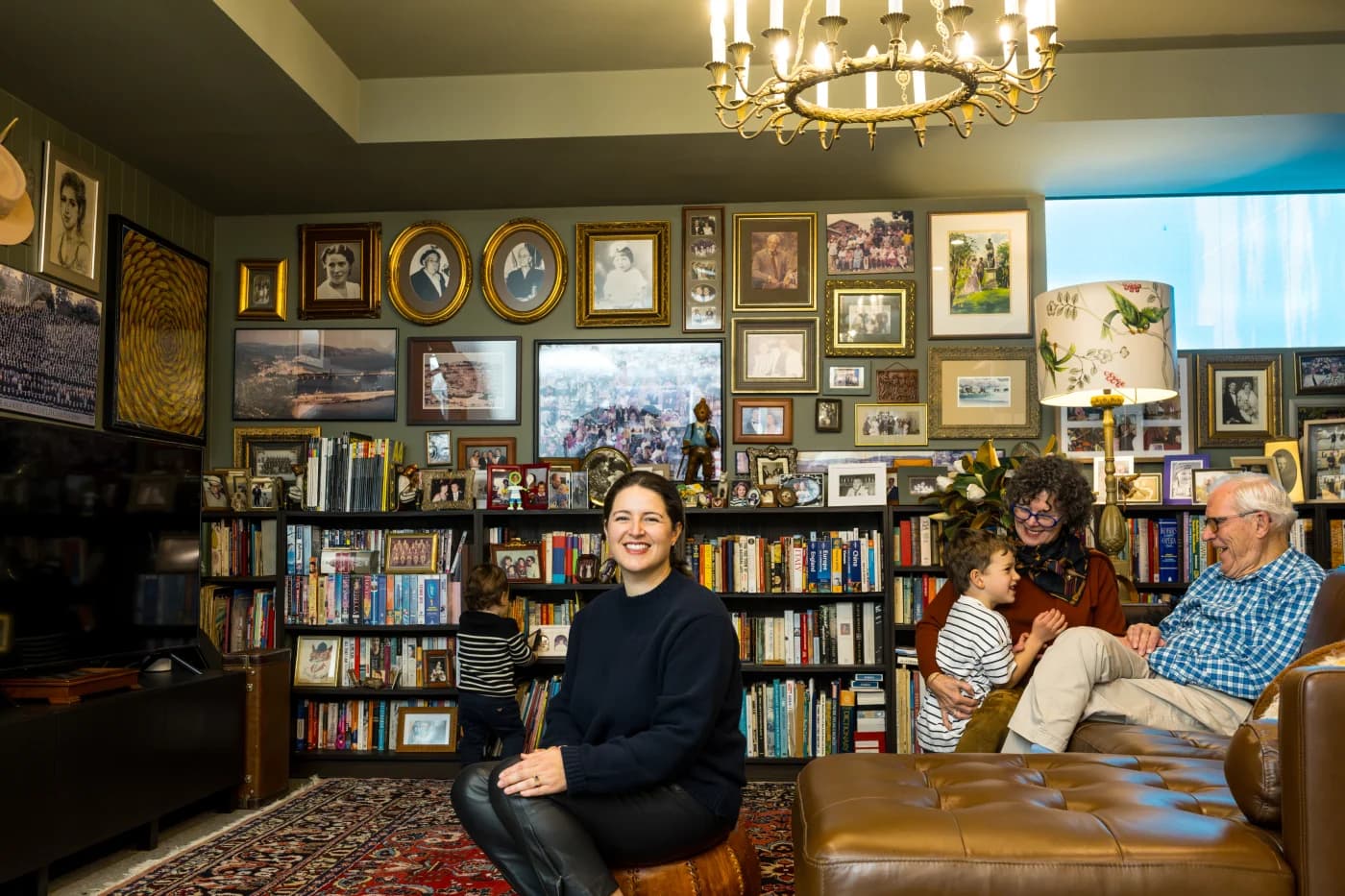
Benkemoun, 37, is preparing to undertake a PhD exploring the future of ageing-in-place and adaptable housing, while through her company La Vie she specialises in future-proofed design, development and consulting.
Her house, which serves as a template for future models, is praised by Professor Irene Blackberry, the John Richards chair and director of the Australian Institute of Primary Care and Ageing at La Trobe University.
“This is a fantastic house, an amazing house,” she says.
“It’s so fit for purpose for virtually any person or family. It makes so much sense these days, too, when people are living so much longer, and the span of being an older person is expanding.
“We live in a housing environment where we need to be able to be adaptable enough to accommodate a person throughout their journey from their younger, healthier years all the way through their 90s.
“But this is still very new, and the design needs to be scaled up and the price made affordable for the wider community. Certainly, design generally needs to be thought about more, and some of these principles put in all new homes.”
Leading architect, urban designer, architectural judge and lecturer Michael Zanardo of Studio Zanardo agrees that some of these design aspects need to be regarded as universal.
“Houses are there for 50 to 100 years,” he says. “So, with the infrastructure, like houses, that we build for society, we should be thinking about their future.
“The concept of universal housing is important so that everyone can use houses, whether they’re older or with a disability, or children. It’s important to envisage them for everyone for a long time ahead.”
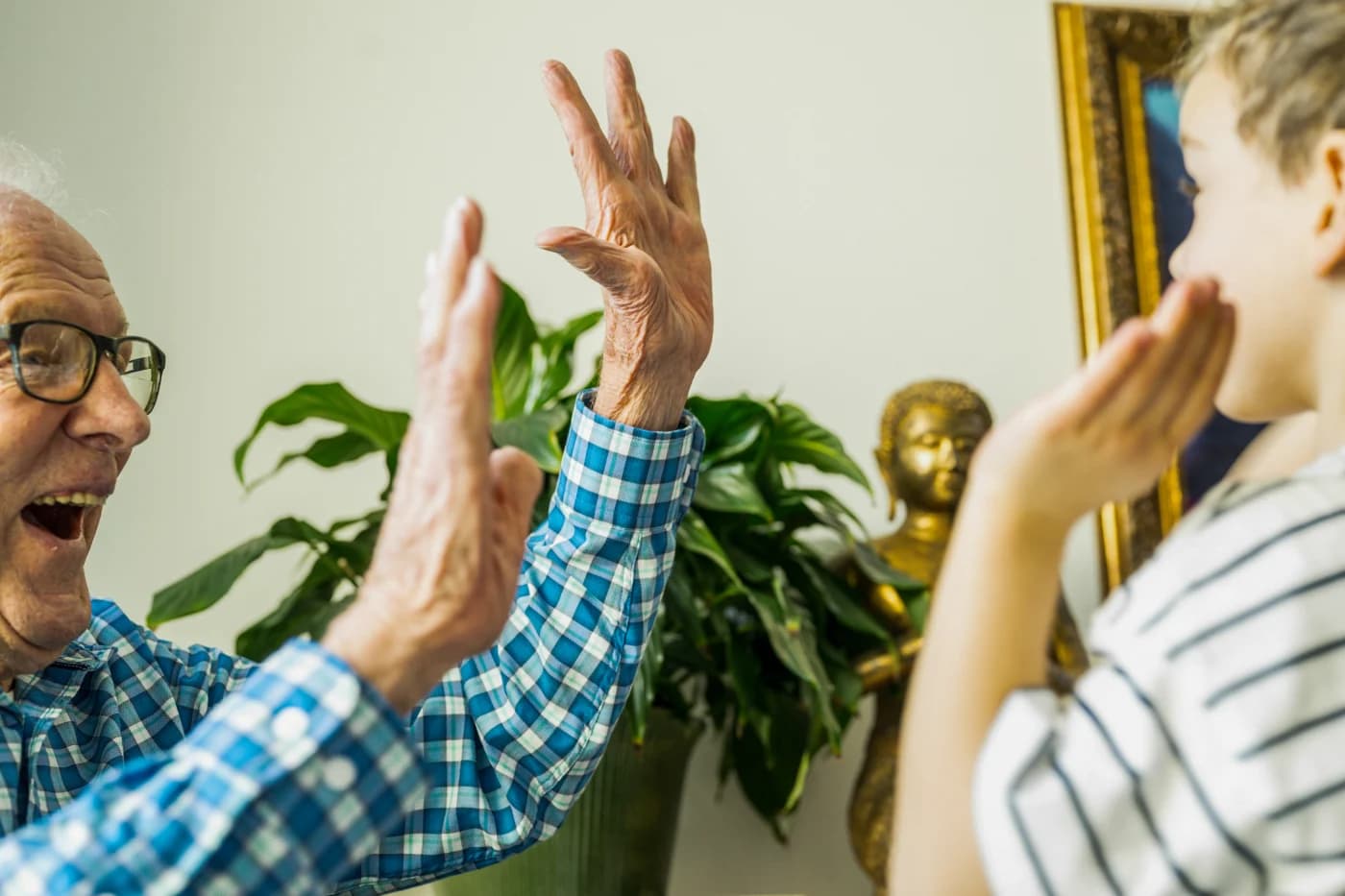
Benkemoun’s mother, Deb, 66, loves living in the house, although her mother died just before it could be completed with delays in the planning system and COVID. Her husband, Claude, lived for 12 months there too before his death three years ago from cardiac complications at the age of 77.
She lives there now, though, with her father, Rick, 92, who also spends large chunks of time in the house, as do Gisele and her grandchildren.
“My home is incredible, and it caters to every possible need,” she says.
“The idea for having my parents here came from my husband, who was French and believed in multigenerational care for elders.
“My daughter became passionate about designing for everyone after growing up with her grandmother, who was born partially blind and had five brain tumours and lost her hearing and then her mobility.
As well, there have been times when I’ve been living here on my own, and I could then use parts of the house as an Airbnb to earn income. I love living here; it’s just so flexible.”
Maxime, aged five, also says he enjoys being so close to his grandmother and his great-grandfather.
“Just for love,” he says.
And at the other end of the spectrum, Rick relishes time spent with the next three generations of his family, spending long periods in his swivel chair from which he can join in with conversations in the open-plan kitchen, or watch the children in the garden.
“It has a lovely amount of room so you have space to move around,” he says.
“It’s also so light with a great layout, and no dark corners.”
As for Gisele Benkemoun, she loves the idea of providing more, and better, housing options for people as they age, as an alternative – if wanted – to retirement villages and aged care centres.
“It’s often nice for older people to be surrounded by their family as they age, so they can enjoy a quality of life until the end,” she says.
“Sense of community and loneliness are massive topics, so supporting people to live happily together through the thoughtful design of their home can be incredibly valuable.”
This multigenerational home is available to tour on July 25 and 26 as part of this year’s Open House Melbourne.
View on Domain (opens in a new tab)